
Our History
The historic church where thousands gathered to launch the Montgomery Bus Boycott, Holt Street Baptist Church hosted the first community gathering of the movement that changed America.
A Church Rooted in Community

Founded in 1909, Holt Street Baptist Church has long stood as a spiritual and cultural cornerstone of Montgomery’s Black community. The historic church building, completed in 1913 at the corner of Holt and Bullock Streets, became far more than a place of worship—it became a gathering place for faith, fellowship, and community leadership.
For generations, Holt Street Baptist Church served as a beacon of hope and resilience for families throughout Montgomery, offering spiritual guidance and a place where neighbors could come together during times of hardship and change.
Montgomery in a Time of Segregation
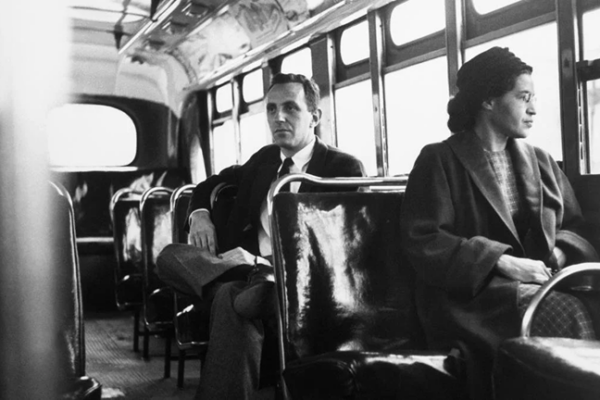
By the mid-20th century, segregation laws deeply affected everyday life in Montgomery, Alabama. Black citizens faced discrimination across nearly every aspect of public life, including transportation, education, and voting rights.
On December 1, 1955, Rosa Parks changed the course of history when she refused to surrender her seat to a white passenger on a segregated Montgomery city bus. Her arrest sparked outrage across the Black community and became the catalyst for organized action against racial injustice.
Community leaders and organizations, including the Women’s Political Council and the NAACP, quickly mobilized to challenge the city’s segregation laws through a coordinated bus boycott.
The Meeting That Changed America
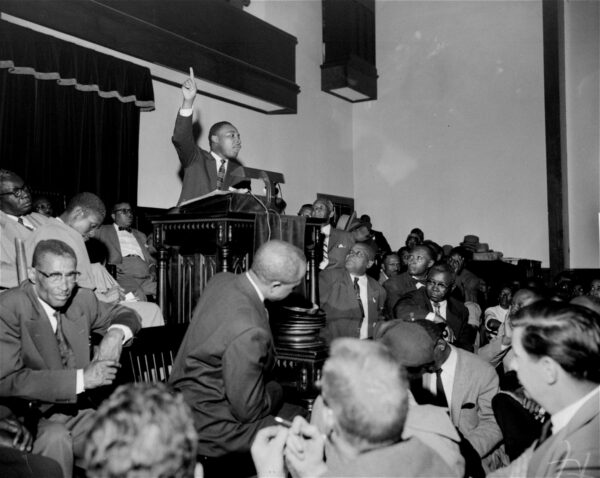
On December 2, 1955, local ministers and civic leaders gathered at Dexter Avenue Baptist Church to organize a one-day boycott of Montgomery’s bus system. During that meeting, Reverend A.W. Wilson, pastor of Holt Street Baptist Church, offered his church as the site for a citywide mass meeting.
That decision would forever place Holt Street Baptist Church at the center of American history.
Earlier on December 5, 1955, the Montgomery Improvement Association (MIA) was formed at Mount Zion A.M.E. Church, and a young Dr. Martin Luther King Jr. was chosen as its president. That evening, after a day of nearly empty city buses, thousands gathered at Holt Street Baptist Church to determine the future of the protest movement.
The Birthplace of the Modern Civil Rights Movement

On the night of December 5, 1955, an estimated 5,000 people filled Holt Street Baptist Church and overflowed into the surrounding streets, sidewalks, and parking lots. Inside the sanctuary, powerful speeches inspired unity, courage, and collective action.
It was here that Dr. Martin Luther King Jr. delivered one of his earliest major public addresses, calling for justice through nonviolent resistance. The crowd responded with determination and hope, officially launching what would become the Montgomery Bus Boycott.
That meeting marked the birth of the modern Civil Rights Movement.
For more than a year, Black citizens of Montgomery organized carpools, walked miles to work, and remained united in peaceful protest. Their discipline and courage demonstrated the power of collective action and inspired civil rights activism across the nation for decades to come.
A Sanctuary of Solidarity
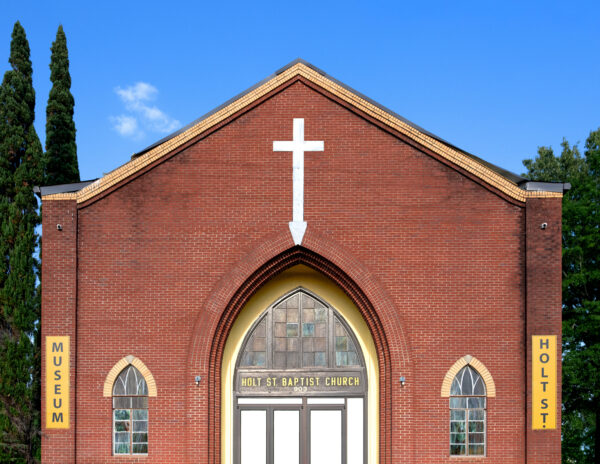
Throughout the boycott, Holt Street Baptist Church remained a place of empowerment and strategy. The church served as a hub where community members gathered to organize, encourage one another, and sustain the movement through faith and perseverance.
The congregation and leadership of Holt Street Baptist Church played a vital role in supporting the boycott’s success and advancing the fight for equality and justice in America.
Today, Montgomery is remembered around the world for the courage and dignity shown by those who stood together in 1955—and Holt Street Baptist Church remains one of the movement’s most sacred historic landmarks.
Preserving the Legacy

Today, the Holt Street Baptist Church Historical Society works to preserve and share the history of the church and the Montgomery Bus Boycott through education, research, and community engagement.
As a historic site and future museum destination, Holt Street Baptist Church continues to honor the individuals who gathered here to change the course of American history. Visitors are invited to experience the place where ordinary citizens united through faith, courage, and nonviolent action to inspire a movement that transformed the nation.